

Khatam-kari is often translated as marquetry, which gives the wrong picture. Marquetry is a veneer cut to shape and laid into a surface. Khatam is closer to how a stick of seaside rock gets its lettering.
The maker starts with thin rods - walnut, jujube and orange wood, brass wire, and camel bone - and binds them into a bundle whose cross-section is a single six-pointed star. Several bundles are then bound into a larger bundle, and that into a larger one again. The whole assembly is glued, clamped and left.
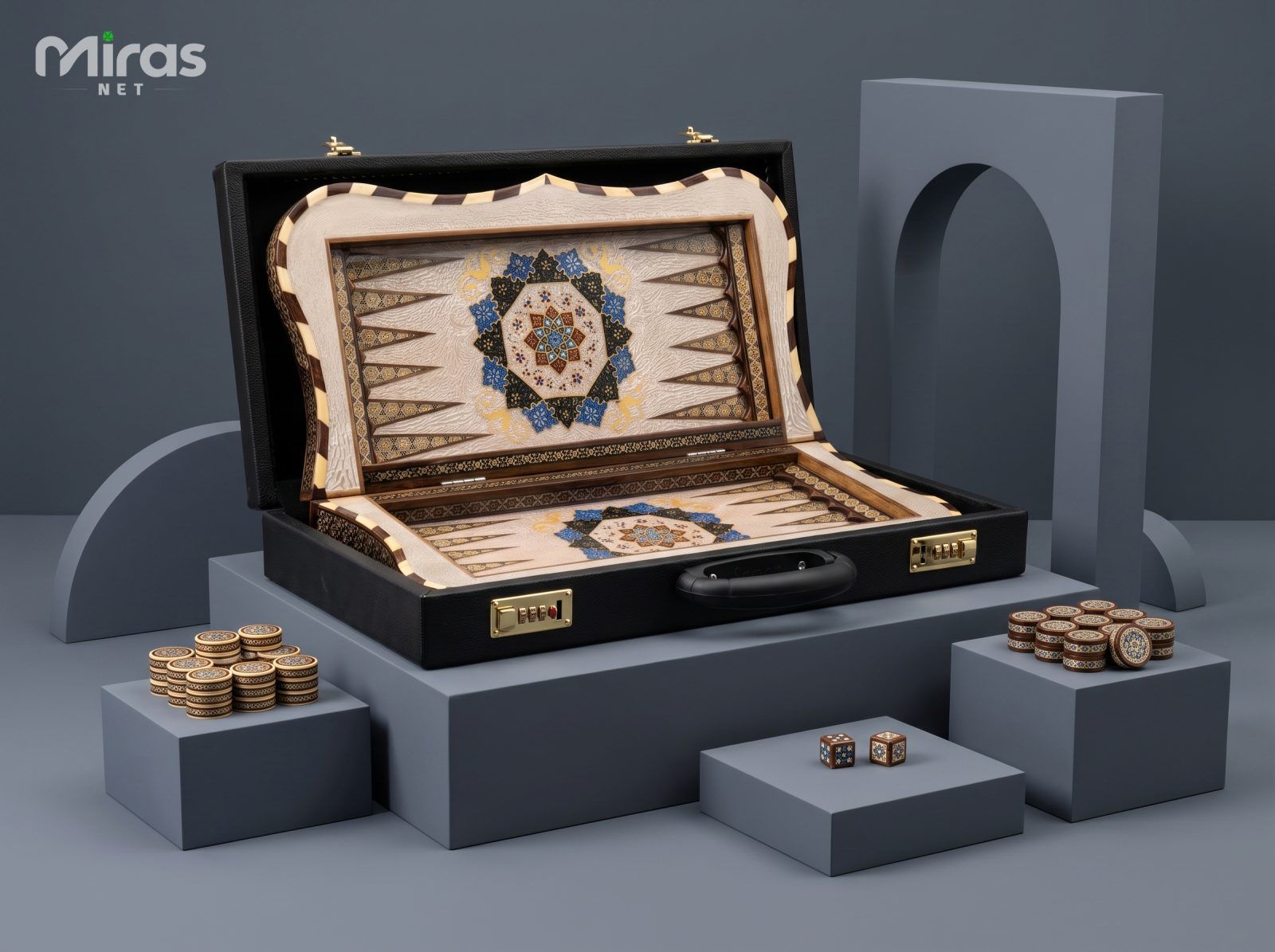
Only then is it sliced. Every slice, less than a millimetre thick, carries the complete pattern, and those slices are what gets applied to the box or the frame. A single square centimetre of good khatam can contain four hundred individual pieces of wood, brass and bone.
The finest work comes out of Isfahan and Shiraz. It is worth knowing that the pattern never repeats across a curved surface without the maker cutting and fitting each slice by eye, which is why a well-made khatam box has a continuous star pattern around its corners and a cheap one does not.
What khatam actually is
Not inlay, not marquetry in the European sense. Bundles of wood, brass and bone, drawn out like a stick of rock.

Comments
3 commentsNo comments on this piece yet. Be the first.